
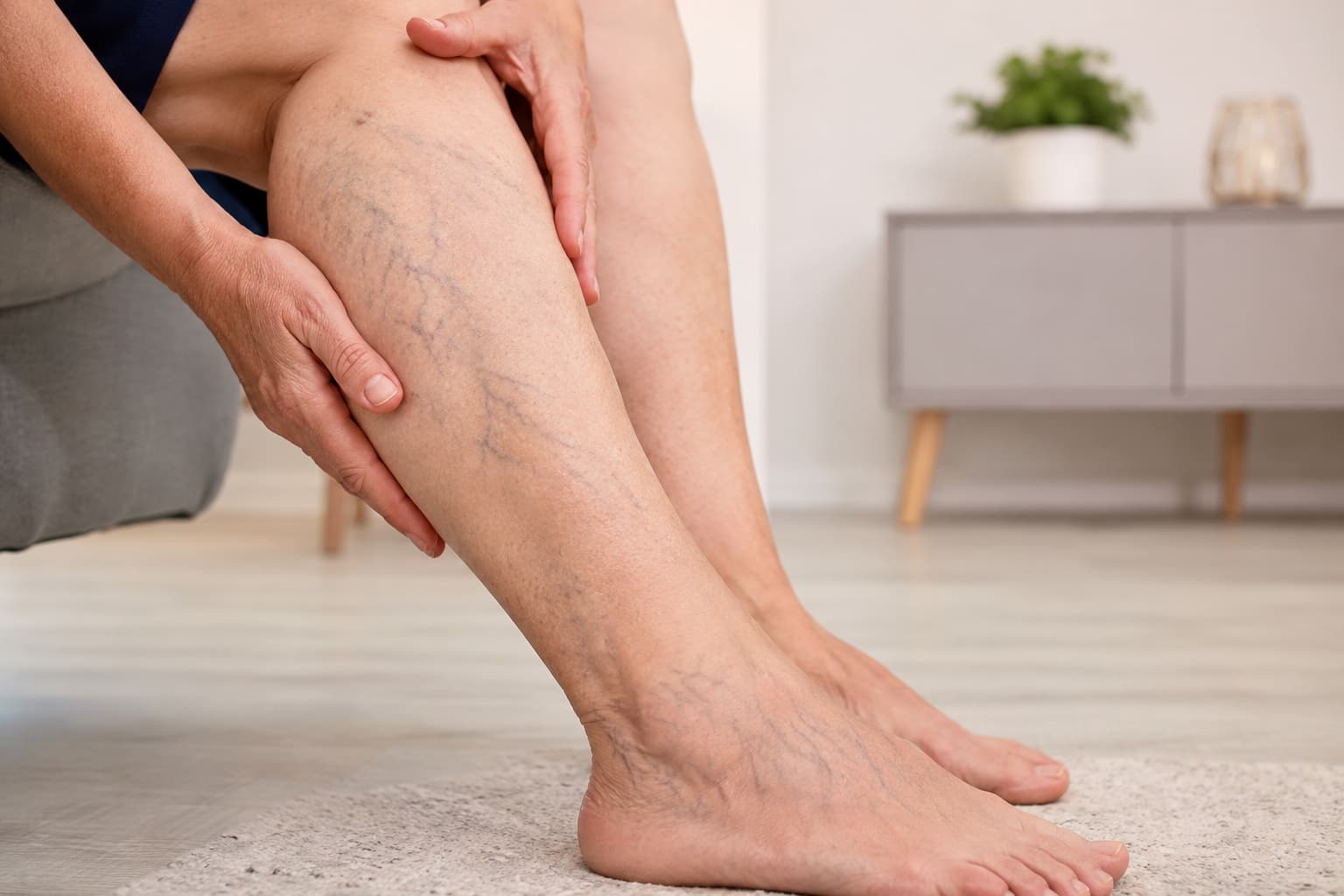
Sore Varicose Veins in Chester
Sore varicose veins are one of the most common reasons people arrange a vascular assessment. Although varicose veins are often thought of as a cosmetic concern, aching, tenderness and persistent discomfort usually indicate that the veins are no longer functioning efficiently.
The pain may begin as an occasional ache after spending hours on your feet, but over time it can become more frequent, affecting work, exercise, walking and even sleep. In many cases, soreness is linked to chronic venous insufficiency, in which faulty valves in the veins allow blood to flow backwards and collect in the veins rather than return efficiently to the heart.
Understanding why varicose veins become sore, recognising when symptoms require assessment and knowing which treatments are available can help prevent the condition from progressing.
At Vein Solutions in Chester, every patient receives a comprehensive clinical examination together with a duplex ultrasound scan to identify the source of venous reflux before discussing the most appropriate treatment.
Why Do Varicose Veins Become Sore?
Healthy veins contain one-way valves that allow blood to travel back towards the heart while preventing it from flowing backwards. Over time, these valves can weaken or become damaged.
When this happens, blood begins to pool within the vein instead of moving efficiently upwards. The resulting increase in venous pressure causes the vein walls to stretch and enlarge, eventually producing the visible twisted veins associated with varicose veins.
As pressure continues to build, the vein wall becomes inflamed. Inflammatory changes within the lining of the vein allow fluid and inflammatory cells to pass into the surrounding tissues, producing aching, tenderness and swelling. This inflammatory response explains why soreness often worsens after prolonged standing and improves when the legs are elevated.
Without treatment, the abnormal pressure may continue to increase, leading to progressive symptoms and changes in the surrounding skin.
Why Are Some Varicose Veins Painful While Others Are Not?
One of the most common questions patients ask is why some large varicose veins cause very little discomfort while much smaller veins can be surprisingly painful.
The severity of symptoms does not necessarily relate to the size of the visible vein. Several factors, including the amount of venous reflux, pressure within the affected vein, local inflammation, involvement of smaller branch veins and individual differences in pain sensitivity, influence pain.
The position of the vein can also affect symptoms. Veins located around the knee or ankle may become more uncomfortable because these areas are subjected to repeated movement throughout the day.
This is why vascular specialists do not rely on appearance alone. A duplex ultrasound scan provides a far more accurate picture of the underlying disease than visible veins themselves.
Different Types of Pain Associated with Varicose Veins
Pain associated with varicose veins varies considerably from one person to another.
- Aching Legs
A dull ache is one of the most frequently reported symptoms. It often develops gradually during the day and becomes more noticeable after prolonged standing.
Many patients report feeling relief after walking or elevating their legs.
- Tenderness
Some veins become painful when touched or pressed.
Tenderness often reflects inflammation within the vein and may occasionally indicate superficial thrombophlebitis, in which a clot develops within a superficial vein.
- Burning Sensation
A burning discomfort can occur as the vein stretches and surrounding tissues become irritated by ongoing inflammation.
- Throbbing Pain
Some patients notice a throbbing sensation, particularly after standing for long periods or during warmer weather when veins naturally dilate.
- Night-time Discomfort
Symptoms often become more noticeable during the evening. Some people also experience restless legs, muscle cramps or discomfort that interferes with sleep.
Pain Does Not Always Reflect the Severity of Vein Disease
Many people assume that severe pain means severe varicose veins, but this is not always the case.
Some patients experience considerable discomfort despite having relatively small visible veins, while others have extensive varicose veins with surprisingly few symptoms.
Similarly, significant venous reflux may already be present before discomfort becomes obvious. This is why a duplex ultrasound scan is considerably more valuable than appearance alone. It identifies how efficiently the veins are functioning and shows exactly where blood is flowing in the wrong direction.
Treatment decisions are therefore based on the underlying vein function rather than the appearance of the veins themselves.
Symptoms That Often Accompany Sore Varicose Veins
Pain is rarely the only symptom of varicose veins.
As venous disease develops, patients commonly experience:
- Aching legs
- Leg heaviness
- Tired legs
- Swollen ankles
- Itching around the veins
- Burning sensations
- Muscle cramps
- Restless legs
- Visible bulging veins
- Brown skin discolouration
- Venous eczema
- Tight or hardened skin around the ankles
The combination of soreness with swelling or skin changes usually indicates more advanced venous disease.
Progression of Sore Varicose Veins
Varicose vein symptoms usually develop gradually rather than appearing suddenly.
In the early stages, aching may occur only after prolonged standing, exercise, or exposure to hot weather. Legs often feel heavy towards the end of the day, then improve overnight.
As venous disease progresses, discomfort becomes more frequent. Swelling around the ankles, itching, visible enlargement of the veins and muscle cramps often develop alongside increasing soreness.
Without treatment, venous hypertension can begin affecting the skin. Brown pigmentation around the ankles, venous eczema, hardening of the skin and, in more advanced cases, venous leg ulcers may eventually develop.
Assessment during the earlier stages often allows treatment before these complications occur.
Everyday Factors That Can Make Varicose Vein Pain Worse
Several everyday activities increase pressure inside the leg veins and can make symptoms more noticeable.
- Standing for Long Periods
Remaining on your feet for several hours places continuous pressure on the veins.
Healthcare professionals, retail workers, teachers, hospitality staff, factory workers and hairdressers frequently report worsening discomfort during working days.
- Sitting for Long Periods
Long periods of sitting reduce calf muscle activity, limiting one of the body’s most effective mechanisms for returning blood to the heart.
Office workers and people travelling long distances often notice increasing discomfort towards the end of the day.
- Warm Weather
Higher temperatures cause veins to widen, allowing more blood to pool inside already weakened veins.
Many patients find that aching and swelling become worse during the summer months.
- Pregnancy
Pregnancy increases circulating blood volume while hormonal changes relax vein walls. The growing uterus also places additional pressure on the pelvic and leg veins, making symptoms more noticeable.
- Exercise
Most forms of exercise improve circulation and benefit vein health.
Walking, swimming and cycling are generally encouraged, although high-impact exercise may temporarily increase discomfort in some individuals.
When Sore Varicose Veins Need Prompt Medical Assessment
Although most sore varicose veins are not emergencies, certain symptoms require urgent medical attention.
These include:
- Sudden swelling affecting one leg
- A painful red vein that becomes hard to touch
- Bleeding from a varicose vein
- Skin ulcers around the ankle
- Sudden worsening pain associated with significant swelling
- Chest pain or breathlessness following leg swelling
These symptoms may indicate complications such as superficial thrombophlebitis or deep vein thrombosis and should always be assessed promptly.
Other Conditions That Can Cause Similar Symptoms
Not every painful leg is caused by varicose veins.
Several other conditions can produce similar symptoms.
- Deep Vein Thrombosis
A deep vein thrombosis usually causes pain, tenderness and swelling affecting one leg and requires urgent medical assessment.
- Peripheral Arterial Disease
Pain caused by reduced blood supply typically develops during walking and improves with rest. The feet may also feel cold, and pulses may be reduced.
- Musculoskeletal Problems
Muscle injuries, arthritis and tendon disorders frequently mimic vein pain.
- Nerve Conditions
Sciatica and peripheral neuropathy may produce burning, tingling or shooting pain unrelated to venous disease.
A duplex ultrasound scan helps distinguish venous disease from many alternative causes of leg discomfort.
Diagnosing Sore Varicose Veins
Visible veins alone cannot determine whether treatment is required.
Assessment begins with a discussion of your symptoms, medical history, occupation, lifestyle and any previous vein problems before a duplex ultrasound scan is performed.
The ultrasound identifies:
- Faulty vein valves
- Areas of venous reflux
- Blood flow direction
- Enlarged superficial veins
- The condition of the deep veins
The scan is painless, non-invasive and does not involve radiation. During the examination, blood flow can be observed in real time, allowing the vascular specialist to identify exactly which veins are responsible for your symptoms. The examination also produces a detailed treatment map, ensuring any procedure is directed towards the underlying source of venous reflux.
Managing Sore Varicose Veins Before Treatment
Although conservative measures cannot repair damaged valves, they may help reduce symptoms.
- Compression Stockings
Graduated compression stockings support the veins and improve blood flow back towards the heart, helping reduce swelling and aching.
- Regular Walking
Walking activates the calf muscles, improving venous circulation and reducing blood pooling.
- Leg Elevation
Elevating the legs above heart level for around 20 to 30 minutes helps lower venous pressure and reduce swelling.
- Maintaining a Healthy Weight
Reducing excess body weight decreases pressure on the veins and may lessen symptoms.
- Looking After the Skin
Keeping the skin moisturised reduces dryness and irritation associated with chronic venous disease.
Temporary Relief for Sore Varicose Veins
Simple lifestyle measures often provide temporary relief while awaiting assessment or treatment.
Regular walking encourages healthy blood flow through the leg veins, while elevating the legs after prolonged standing can reduce swelling and discomfort. During warmer weather, keeping the legs cool with loose clothing or cool showers may also help reduce symptoms.
Simple pain relief may be appropriate for some patients. However, persistent or worsening pain should always be investigated rather than repeatedly managed with medication alone, as treatment should address the underlying venous reflux.
Treatment Options for Painful Varicose Veins
Modern treatment aims to eliminate the faulty vein while allowing healthy veins to continue returning blood to the heart.
- Endovenous Laser Treatment (EVLT)
Laser energy seals the abnormal vein from within under ultrasound guidance. The treated vein gradually shrinks before being absorbed naturally by the body.
- Radiofrequency Ablation
Radiofrequency energy heats and seals the affected vein using a minimally invasive catheter technique.
- Medical Adhesive Closure
Medical glue seals the diseased vein without heat, reducing the need for multiple injections of local anaesthetic.
- Ultrasound Guided Foam Sclerotherapy
A specially prepared foam is injected into the affected vein, causing it to close and then gradually be absorbed.
- Ambulatory Phlebectomy
Larger surface veins can be removed through tiny skin openings using local anaesthetic.
The most appropriate varicose vein treatment depends entirely on the ultrasound findings rather than the appearance of the veins.
Misconceptions About Sore Varicose Veins
Several misconceptions prevent people from arranging an assessment.
Some believe sore veins are simply part of getting older. Although age increases the likelihood of developing varicose veins, pain results from abnormal venous pressure rather than ageing itself.
Another misconception is that exercise makes varicose veins worse. In reality, regular walking is one of the most beneficial activities for improving circulation, although some higher-impact activities may temporarily increase discomfort.
Many people also believe only large veins require treatment. Small veins can produce significant symptoms when underlying venous reflux is present.
Compression stockings are sometimes viewed as a cure. While they often reduce swelling and discomfort, they do not repair damaged valves or eliminate the underlying cause of varicose veins.
Living Comfortably After Treatment
Successful treatment removes the source of venous reflux that increases venous pressure.
As blood is naturally redirected into healthy veins, many patients experience significant improvements in aching, swelling and heaviness.
Although treated veins rarely reopen, varicose veins are a chronic condition influenced by age, genetics, pregnancy and lifestyle. New varicose veins can therefore develop elsewhere over time.
Maintaining a healthy weight, remaining physically active, avoiding prolonged sitting or standing, and attending assessment if new symptoms develop can all help maintain vein health.
Vascular Specialists in Chester
Persistent soreness in varicose veins should never be dismissed as an inevitable part of getting older. Although symptoms may begin as occasional aching after a long day, they often indicate increased venous pressure due to faulty valves and venous reflux. Without assessment, discomfort may gradually progress to swelling, skin changes and more advanced venous disease.
At Vein Solutions in Chester, Mr Sameh Dimitri and his team have more than 20 years of experience diagnosing and treating varicose veins using minimally invasive techniques. Every consultation includes a detailed clinical examination and a duplex ultrasound scan, enabling the underlying cause of your symptoms to be accurately identified before treatment is recommended.
Treatment is planned according to your ultrasound findings and individual symptoms. Modern procedures, including endovenous laser treatment, radiofrequency ablation, medical adhesive closure and foam sclerotherapy, are performed under local anaesthetic as walk-in, walk-out procedures, with most treatments taking less than an hour. Aftercare is included to provide reassurance throughout your recovery.
Having successfully treated more than 4,000 patients, Vein Solutions provides comprehensive vascular assessment and evidence-based treatment for patients throughout Chester and the surrounding areas. Early assessment can relieve ongoing discomfort, improve quality of life and help prevent venous disease from progressing further.
Related Articles
- Varicose Vein Pain
- Analgesia (Pain Relief) for Varicose Veins
- Varicose Veins That Feel Worse in Summer
- Burning Sensation in Legs and Vein Problems
- Treatment Options for Venous Insufficiency in Chester
Prefer an AI Summary?